Most people who hear about Isotretinoin will go, “Iso what???”… “What in the world is that?”
Isotretinoin is a retinoid that is derived from Vitamin A. It has a chemical name that is just as mind boggling, 13-cis retinoic acid. While it is not necessary to know how it is produced or take a degree in chemistry to understand it, you do need to know how it is used to treat acne and if there are any adverse side effects.
Isotretinoin is extremely effective for dealing with severe acne and in most cases, doctors only prescribe it as a last resort when conventional cleansing methods and acne creams fail. This drug is highly potent and should be consumed very carefully.
It is so powerful that pregnant women who consume it will cause their unborn child to have birth defects in future. This drug must always be prescribed by a doctor and you will need to follow your doctor’s instructions to the letter.
If you’re sexually active while on Isotretinoin, it will affect you should you get pregnant. The best person to talk to in this case, will be your doctor. While Isotretinoin is very strong and does have a few undesirable side effects, it is the last bastion of hope for acnes sufferers who have tried everything else to no avail.
So, how does Isotretinoin work?
Basically, it treats the acne by shrinking the sebaceous glands and reducing sebum production. Since the over-production of sebum leads to clogged pores and infected glands, this is a very efficient way of halting the acne problem from worsening.
The drug is anti-inflammatory and removes comedones which leave the treated skin dry. This will inhibit the growth of the bacteria that causes acne since conditions on the skin are unsuitable for it to thrive.
The doctor usually prescribes Isotretinoin when the acne is severe, may cause scarring or when moderate acne medication seems to have no effect on the patient’s acne condition. Isotretinoin is also prescribed for other skin conditions such as folliculitis, seborrhoea, chloracne and other diseases that have symptoms that resemble acne.
Your doctor will decide on your dosage. This is where things get tricky. Many people think that they can get rid of their acne faster by upping the dosage on their own in the privacy of their home. Do not do this. Let the body convalesce on its own time. You cannot rush the healing process and may do more damage than good. There is no rush.
Since this is a strong drug, your doctor will monitor your progress and schedule future appointments so that they can check if the drug is working and see if there are any adverse side effects.
In most cases, you will start with a small dosage to see if the body is responsive. If the acne shows signs of diminishing, the dosage will be increased. You will need to consume it after eating because the drug needs fat to assist with its absorption into the body. Once again, your doctor will tell you exactly what to do.
There are some side effects that come with Isotretinoin. You may experience dry mouth, dry nose, thinning of hair, fatigue, dry skin, red itchy eyes, sore lips etc. If you experience any other side effects such as muscle aches, difficulty walking, depression, vomiting etc. seek medical help immediately. Do not just bury your head in the sand and expect the side effects to go away on their own.
In conclusion, you should only use Isotretinoin to treat acne if it is very serious. Most people do not have such serious acne. If you have mild or moderate acne, you can definitely make some changes to your lifestyle to prevent breakouts and use normal acne medication to alleviate your problem.
You may have heard the saying, “An apple a day keeps the doctor away”. It’s true yet so few abide by it. This is a daily habit that should be done without fail. You can’t suddenly remember and eat all 7 apples on Saturday and expect to get the job done. It doesn’t work that way.
Nowadays, most people place more emphasis on taste over substance. The junk food, fast food, sugary desserts, mouth-watering chocolates, refreshing sodas, etc. have become a staple part of the daily diet.
Fruits and vegetables have taken a back seat and become an afterthought. This could be one reason why obesity has become an epidemic and society these days is sicker than it has ever been.
There have been more acne cases over the past decade than there have been for years before that. This is due to the poor food choices and high stress levels in life today.
One way to remedy the situation will be to make eating at least two servings of fruit a daily habit. This is especially beneficial if the fruits are red or orange in color. There is a plethora of benefits associated with the regular consumption of fruits.
Skin problems, constipation, health disorders, nutrient deficiencies, lack of energy, etc. can all be prevented just by eating the right fruits.
To start off, you can start eating apples. The saying may only recommend 1 apple a day but since you have acne, you may go ahead and eat 3 to 4 apples a day. Preferably one before each meal. Always consume your fruits before the meal and not after.
It is best to eat organic fruits because the pesticides used on non-organic fruits may be acne triggers depending on your constitution.
Apples are rich in ascorbic acid, bioflavonoids, fiber, pectin, quercetin, minerals, and vitamins. The pectin in the apple skin will also prevent constipation just like how apricots prevent constipation. Speaking of apricots, those are excellent for consumption too.
Let’s not forget bananas that have so many nutrients that you just cannot afford to leave it out of your diet. However, you shouldn’t consume more than one banana a day. Bananas keep bad bacteria in check and by doing this, toxic acids will not get to the skin and cause acne.
Blackberries and blueberries are also excellent fruits that acne sufferers should consume. Despite their small size, these berries are potent and cleanse the blood and prevent constipation. Blackberries also benefit your kidneys and promote good skin health. Blueberries have been shown to be effective against various skin disorders such as eczema, acne and psoriasis.
Other good fruits to consume will be cantaloupes, cherries, figs, grapefruits, grapes, mangoes, strawberries and pineapples. Do take note that you are supposed to be consuming fresh fruits and not the fruit juices sold in stores. Those are high in sugar, additives and will do more harm than good.
The fruits mentioned in this article are rich in fiber, vitamins and minerals. They will cleanse the body, strengthen the immune system and make you skin healthy. Acne can be prevented to a large extent if your body is in balance and your immune system is strong.
Make fruits a part of your daily diet. Remember that every time you eat or drink, you’re either feeding disease or fighting it.
There is a saying, “You are what you eat.” This especially holds true when dealing with acne. One of the biggest culprits of acne is a poor diet. It indirectly causes a series of chain reactions within the body that causes acne breakouts.
Remember the old wives’ beliefs that oily foods cause pimples. To a certain extent this is true. Our diets these days are for most part, unhealthy. The use of hydrogenated oils, refined sugars, additives, etc. cause inflammation in the body.
This leads to the sebaceous glands working in overdrive and releasing too much sebum which in turn will end up clogging the follicles in the skin. Once that happens, the bacteria on the skin will infect the follicles and this will result in acne appearing on the skin.
The acne is just a symptom and is usually the final symptom in a long series of physiological processes. Therefore, since it is a symptom, we should address one of the root causes of it.
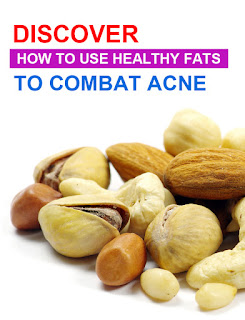
One of the best ways to do that will be to get sufficient essential fatty acids in your diet. These fatty acids will help to control the production of androgens which are the hormones that cause the sebaceous glands to secrete excess sebum.
The body requires 3 types of fatty acids. Omega-3, omega-6 and omega-9. When you are deficient in these fatty acids, you will be susceptible to a host of health problems such as bad skin, weak immune system, inflammation, lesions that won’t heal fast, excessive sebum production and larger sebaceous glands.
The best way to remedy this situation will be to consume the essential oils and fatty acids that the body needs. Our current diets are often too high in omega-6 and this throws off the balance of fatty acids in the body.
You should consume foods such as nuts, seeds, oily fish (salmon, sardines, albacore tuna), flaxseed oil, extra virgin olive oil, avocados, pumpkin seeds and walnuts. Dark green leafy vegetables such as spinach, mustard greens and kale are also fantastic sources of essential fatty acids. Popeye wasn’t lying when he said spinach is good for you.
Just by consuming 2 tablespoons of flaxseed oil with your salads or soups will do wonders for your skin. Use extra virgin olive oil in your cooking and you will get more beneficial fatty acids in your system
It may seem like ensuring you consume your daily requirement of fatty acids is just too much effort. It is much easier to just grab the acne cream and slather your skin in it. It’s just as effective right?
It depends. Do you want to deal with acne your whole life? Or do you want to be done with the problem?
Using creams and medication only addresses the symptoms and not the root cause. It’s true that creams and medication are highly effective but they are only good at treating the condition. You must strive to eliminate the problem.
The only way to do this will be to fix the underlying issues such as your diet. The consumption of fatty acids will mitigate any issues in your body that are aggravating it and causing the excess sebum. Since you are targeting the root cause, you will also reduce and eliminate the symptoms gradually.
This is the best way to treat acne. Prevention is better than cure. A wholesome diet rich in fatty acids will be more beneficial than any acne cream in the long run.
Acne can appear on the neck, face, shoulders, chest, back, and even upper arms. When the sebaceous glands under your skin start overproducing the oily substance known as sebum, your pores and skin follicles will get clogged or plugged with oil.
The bacteria on your skin that are harmless then go on to infect these clogged follicles. This will result in redness on the skin and pus occurring within the follicle. As the pus builds up, it will swell and that is how pimples appear. The appearance of the pimples is the final stage of the process.
As long as the skin has sebum and bacteria, it will be susceptible to acne. Whether acne affects and individual or not will depend on a host of factors such as diet, genetics, skin sensitivity, etc. It’s anybody’s guess why some people are more predisposed to acne.
Even the part of the body that will be affected by acne varies with each individual. Some people are more predisposed to developing acne on the back. This is called bacne. It is not a medical term… but a common term used by most people.
Bacne treatment is the same as treatment for most other parts of the body affected by acne. It’s just more difficult since you can’t look behind to see the state of your bacne.
The first step you should do is to wash the skin of your back twice daily with a mild skin cleanser. By doing this, you will wash away much of the bacteria that is infecting the clogged follicles. The cleanser will help to clear some of the sebum away too so that there is less chance of more follicles getting infected and exacerbating the situation.
The second step will be to gently exfoliate the skin. Some people may say that this is not a wise idea because the condition may get worse. This is true for the face but the skin on the back is thicker and less sensitive. You may gently use a loofah to exfoliate your skin.
Another step that is helpful but not essential is to soak your back in salt water. If you live close to the beach, spend about 10 to 15 minutes in the sun and salt water. It will do wonders for your skin. Do not do it for too long or you will end up sun burnt and this worsen the acne.
Another thing you should do is wear loose clothing so that you are not sweaty and your skin can “breathe”. Make sure your clothes are clean. This is especially true for women who wear bras that are in constant contact with the skin. Make sure they are clean and not abrasive.
If you have sensitive skin, the detergent you use may be a silent culprit for your condition. Try switching to another brand of detergent that is milder and see if that has any beneficial effect on your condition.
Lastly, you may use acne creams or medication on your back to alleviate the situation.
Always remember that to a large extent, acne can be prevented with proper skin care and a healthy lifestyle. Make the necessary changes to address the root of the problem instead of merely addressing the symptoms. In this way you can eliminate acne from your life permanently.